
Choosing the Best Natural Alpha Arbutin Powder Manufacturer in China requires more than comparing prices.
The global skincare market reached approximately USD 155.7 billion in 2022, according to Grand View Research. Its report forecasts continued growth through 2030, driven by brightening products and ingredient transparency. However, market growth does not guarantee ingredient quality. Buyers still need verifiable evidence.
Dr. Zoe Diana Draelos, a respected cosmetic dermatologist, describes arbutin as “a naturally occurring derivative of hydroquinone found in the bearberry plant.” This statement explains its botanical association, but it should not replace laboratory verification. Natural sourcing claims can be confusing. A careful supplier should explain whether the material is plant-extracted, fermentation-derived, or nature-identical.
The strongest Chinese manufacturers provide batch-specific HPLC results, purity data, microbiological testing, heavy-metal limits, and full traceability. Look for documentation aligned with ISO 22716 principles and appropriate cosmetic regulations in the target market. Certificates alone are not enough.
Ask for a small sample first. Observe its white appearance, powder flow, packaging seal, and dissolution behavior. Then compare independent test results with the supplier’s certificate of analysis. The comparison may expose gaps.
Grand View Research identifies formulation innovation as a major skincare market trend. That trend increases demand for stable, consistent brightening ingredients. Yet alpha-arbutin can be sensitive to formulation conditions, including heat, light, and unsuitable pH. Manufacturer expertise therefore matters as much as advertised purity.
This guide examines Chinese suppliers through technical documents, production experience, quality controls, and communication reliability. No ranking is permanently perfect. Standards change, and every batch deserves fresh verification.
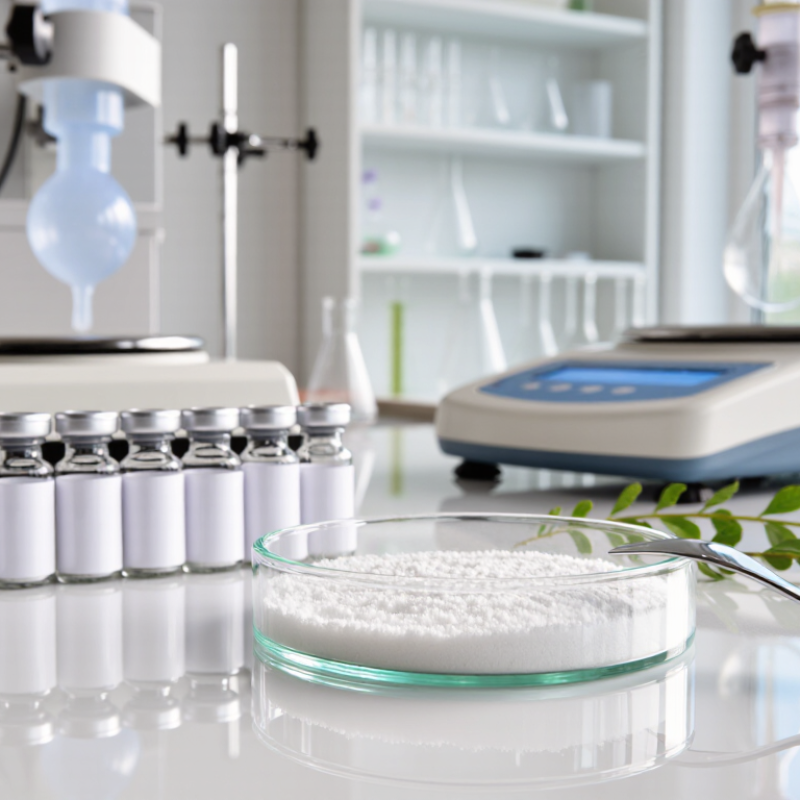
Natural Alpha Arbutin Powder is a cosmetic ingredient used to support a more even-looking skin tone. It is a glycosylated form of hydroquinone and occurs naturally in plants such as bearberry. However, “natural” does not always mean directly harvested from leaves. Some materials use controlled biotechnological production. The source must be verified.
Alpha-arbutin works by moderating tyrosinase activity, an enzyme involved in melanin formation. It is not an instant bleaching agent. Results depend on concentration, formulation stability, skin condition, and regular use. In practice, powder quality matters. Color, odor, moisture, particle uniformity, and microbial control can affect formulation performance.
The European Commission’s Scientific Committee on Consumer Safety, in opinion SCCS/1642/22, assessed alpha-arbutin and considered concentrations up to 2% in face creams and 0.5% in body lotions safe under its stated conditions. This assessment also considered possible hydroquinone formation.
ISO 16128 provides a framework for calculating natural-origin content, but it does not prove ingredient effectiveness or overall product safety. That distinction is often missed.
A reliable supplier should provide identity testing, assay results, residual-solvent data, microbiological limits, and batch traceability.
HPLC testing is commonly used to confirm alpha-arbutin content. Certificates alone are not enough. Independent verification is better.
Some industry descriptions call every plant-linked ingredient “natural.”
That wording deserves scrutiny. A careful buyer should ask about the botanical source, manufacturing route, carrier materials, and storage conditions.
Even excellent powder can degrade under heat, moisture, or unsuitable pH. Expectation management remains essential.
Natural alpha arbutin powder begins with carefully selected plant materials, including bearberry, pear leaves, and cranberry sources. The raw material is washed, dried, and milled under controlled conditions. Water or food-grade ethanol then extracts arbutin compounds from the plant tissue. A 2023 review in Molecules reported arbutin across several botanical families, but natural concentration varies widely. That variation matters.
Manufacturers usually filter the extract before purification through membrane separation, adsorption, and crystallization. Temperature control helps protect the powder’s color and chemical stability. Some producers use enzymatic glycosylation to convert hydroquinone and glucose into alpha-arbutin. This route can offer high consistency, but it may not satisfy strict natural-ingredient standards. ISO 16128-1 distinguishes natural ingredients from naturally derived ingredients, so “natural” requires careful documentation. The label alone is not enough.
Quality testing should include HPLC identity, assay, residual solvents, microbial limits, heavy metals, and moisture. A practical specification often targets assay above 98%, although buyers should verify the supplier’s validated method. Cosmetics Europe reported European cosmetic sales of about €104 billion in 2023, increasing pressure for reliable traceability and repeatable supply. Still, extraction yield is easy to overstate. Small laboratory results may fail at factory scale. Experienced manufacturers therefore compare botanical origin, batch records, chromatograms, and stability data before approving the powder.
China Best Natural Alpha Arbutin Powder Manufacturer?
A reliable natural alpha arbutin powder manufacturer should prove quality with consistent evidence, not attractive promises. In practical sourcing, request a current certificate of analysis for every production batch. It should show alpha arbutin content, identification results, moisture, residue on ignition, and microbiological limits. HPLC testing is important because appearance alone cannot confirm purity. White powder is not proof.
Manufacturing should follow documented GMP-style procedures, with controlled temperature, humidity, and hygienic handling. Ask about raw material origin, extraction records, processing aids, and allergen controls. Heavy metals, residual solvents, and pesticide residues also need suitable testing. Results should come from qualified laboratories, preferably with clear methods and detection limits. Small details matter.
Traceability is another strong standard. Each lot should connect to production dates, operators, equipment records, and retained samples. Proper packaging should protect the powder from moisture and light during shipment. Stability data can help confirm suitable storage conditions and shelf life. An audit or factory video may support trust, but neither replaces independent verification. I have seen polished documents create confidence too quickly. A careful buyer should compare samples, repeat key tests, and question unusual changes between lots. No manufacturer is beyond review. Reliability is demonstrated through transparent records, responsive communication, and quality that remains steady after the first order.
| Quality Dimension | Recommended Acceptance Criterion | Verification Method or Evidence | Why It Matters |
|---|---|---|---|
| Chemical Identity | Confirmed as alpha-arbutin by a validated identification procedure; the product should not be represented as beta-arbutin. | HPLC retention-time comparison, reference standard comparison, and supporting FTIR or NMR data when required. | Confirms that the supplied material is the specified isomer and reduces substitution risk. |
| Assay and Purity | A commonly requested commercial benchmark is not less than 99.0% alpha-arbutin by HPLC, subject to the buyer’s specification. | Batch-specific certificate of analysis with HPLC chromatogram, method details, result, and acceptance limit. | Higher and consistent assay supports predictable formulation performance. |
| Appearance | White to off-white crystalline powder, free from visible foreign matter and abnormal odor. | Visual inspection under controlled lighting and comparison with an approved reference sample. | Provides an initial indication of contamination, degradation, or poor handling. |
| Moisture or Loss on Drying | A typical procurement limit is not more than 1.0%, unless a validated product specification sets a different value. | Validated loss-on-drying or Karl Fischer moisture test recorded on the batch report. | Controls caking, stability risks, and variation in net active content. |
| Residual Solvents | Residual solvents should comply with applicable ICH Q3C limits and the destination market’s regulatory requirements. | GC testing performed by a qualified laboratory, with solvent-specific results rather than a generic “pass” statement. | Demonstrates effective purification and supports consumer safety and regulatory compliance. |
| Heavy Metals | Limits should be defined according to the intended use, destination regulations, and applicable cosmetic or food-supplement requirements. | ICP-MS or ICP-OES test report covering lead, arsenic, cadmium, mercury, and any additional required elements. | Helps identify contamination from raw materials, water, equipment, or processing environments. |
| Microbiological Quality | Total aerobic microbial count, yeast and mold, and specified pathogens should meet the limits applicable to the final product category. | Batch microbiology report using recognized pharmacopeial or validated microbiological methods. | Reduces contamination risks during storage, formulation, and consumer use. |
| pH of Aqueous Solution | A practical internal benchmark may be approximately pH 5.0–7.0 for a defined aqueous test solution; the concentration and method must be stated. | Calibrated pH meter, specified solution concentration, temperature, and test procedure. | Supports formulation compatibility and helps identify abnormal batch variation. |
| Particle Size | The agreed particle-size distribution should match the intended application, such as powder blending, dissolution, or topical formulation. | Laser diffraction or sieve analysis with a stated sampling plan and result distribution. | Affects dispersibility, dissolution rate, blending uniformity, and processing efficiency. |
| Production System | Documented GMP-based procedures, controlled manufacturing records, equipment-cleaning procedures, and deviation or change-control systems. | Current quality manual, audit records, batch manufacturing records, and facility qualification documents. | Shows that quality is managed through a repeatable system rather than final-product testing alone. |
| Laboratory Competence | Critical testing should be conducted by an internal or external laboratory with demonstrated technical competence. | ISO/IEC 17025 accreditation or equivalent evidence for relevant analytical methods and testing scope. | Improves confidence in the accuracy, traceability, and impartiality of test results. |
| Traceability | Every shipment should have a unique lot number linked to raw materials, processing records, test results, packaging, and release approval. | Lot-level documentation, retained samples, supplier records, and a documented recall procedure. | Enables fast investigation and effective control if a quality issue occurs. |
| Packaging and Storage | Moisture-resistant, sealed packaging with lot identification; storage conditions should be stated and followed, typically in a cool, dry, light-protected environment. | Packaging specification, warehouse records, shipping conditions, and stability or retest-date documentation. | Protects the powder from moisture, light, contamination, and avoidable degradation. |
| Stability Information | Available stability data should support the stated shelf life or retest period under defined packaging and storage conditions. | Accelerated and/or long-term stability reports covering assay, appearance, moisture, and relevant degradation indicators. | Helps buyers assess performance throughout transportation and intended storage. |
| Regulatory Documentation | Documentation should clearly state intended use, composition, manufacturing location, applicable standards, and country-specific compliance status. | Specification sheet, safety data sheet, certificate of analysis, allergen or GMO statements where relevant, and audit or certification records. | Reduces import, formulation, labeling, and market-authorization risks. |
Note: The numerical values above are practical procurement benchmarks, not universal legal limits. Final specifications should be confirmed according to the product category, intended use, destination market, validated analytical methods, and buyer’s quality agreement.
A reliable natural alpha arbutin powder manufacturer should test identity, strength, purity, and stability before shipment. HPLC should confirm alpha-arbutin content and separate beta-arbutin, hydroquinone, and related impurities. FTIR can support identity, but it should not replace HPLC. A serious laboratory also checks moisture by Karl Fischer, heavy metals by ICP-MS, and residual solvents by GC. These controls follow the risk-based approach described in ISO 22716 cosmetic GMP guidance.
Microbiological quality matters, even for a dry powder. Testing should reference ISO 17516, including total aerobic count, yeast, mold, and specified pathogens. The SCCS safety opinion on alpha-arbutin discusses maximum use levels in finished cosmetics, not raw-material purity. This distinction is often missed.
Cosmetics Europe reported European cosmetic retail sales of about €96 billion in 2023, showing why traceable raw-material testing is commercially important. Yet market size does not prove product quality.
Tips: Request a batch-specific COA, HPLC chromatogram, allergen statement, SDS, origin records, and stability data. Verify the laboratory’s ISO/IEC 17025 accreditation. A COA is not certification. Ask for independent retesting when results look unusually perfect. Manufacturers should document packaging, lot numbers, storage temperature, and retest dates. I would also review sampling procedures, because a polished report from a poorly collected sample can still mislead. Sodium content, particle size, and water activity may need control for certain formulations.
Selecting a China-based natural alpha arbutin powder supplier requires more than comparing prices. The phrase “natural” needs evidence, including botanical source, extraction method, and production records. Ask for a current certificate of analysis, HPLC purity results, microbiological limits, heavy metal testing, and residual solvent data. Independent laboratory verification adds confidence. A clean sample is useful, but one sample cannot prove batch consistency.
A reliable manufacturer should explain its quality system clearly. Look for traceable raw materials, controlled storage, calibrated equipment, and documented batch numbers. During an audit, inspect sealed packaging, humidity monitoring, and lot separation. Technical staff should discuss dosage, stability, and compatibility without making unsupported cosmetic claims. Clear answers matter. Vague answers are warning signs.
Global distribution also depends on practical details. Confirm export experience, product classification, safety documentation, labeling support, and destination-country requirements. Moisture-barrier bags inside fiber drums can protect powder during long sea transport. Request a pre-shipment sample and agree on inspection procedures before payment. Delivery terms, insurance, lead time, and temperature exposure should be written into the contract. A lower quotation may hide weaker testing or inconsistent packing. I once treated fast communication as proof of reliability; it was not. Performance history, not friendly messages, should guide the final decision.
