How to Choose the Best Greenhouse Lights for Your Plants?
When it comes to nurturing healthy plants in a greenhouse, the right lighting is vital. Expert horticulturist Dr. Emily Carter states, "Choosing the correct greenhouse lights can make or break your plant growth." The variety of greenhouse lights available can be overwhelming. Understanding which type suits your plants best is essential.
Many growers underestimate the importance of light quality, duration, and intensity. LED lights, for example, offer efficiency and longevity, but are they the best choice? Traditional fluorescent lights have been popular, yet they may fall short in providing specific wavelengths needed for optimal growth.
The process of selecting greenhouse lights requires careful consideration. Not every grower has the same needs. For some, energy savings is a priority, while others might focus on maximizing plant yield. It’s a balancing act. Reflection on these aspects leads to better decisions and, ultimately, healthier plants.
Understanding the Importance of Proper Lighting for Plant Growth
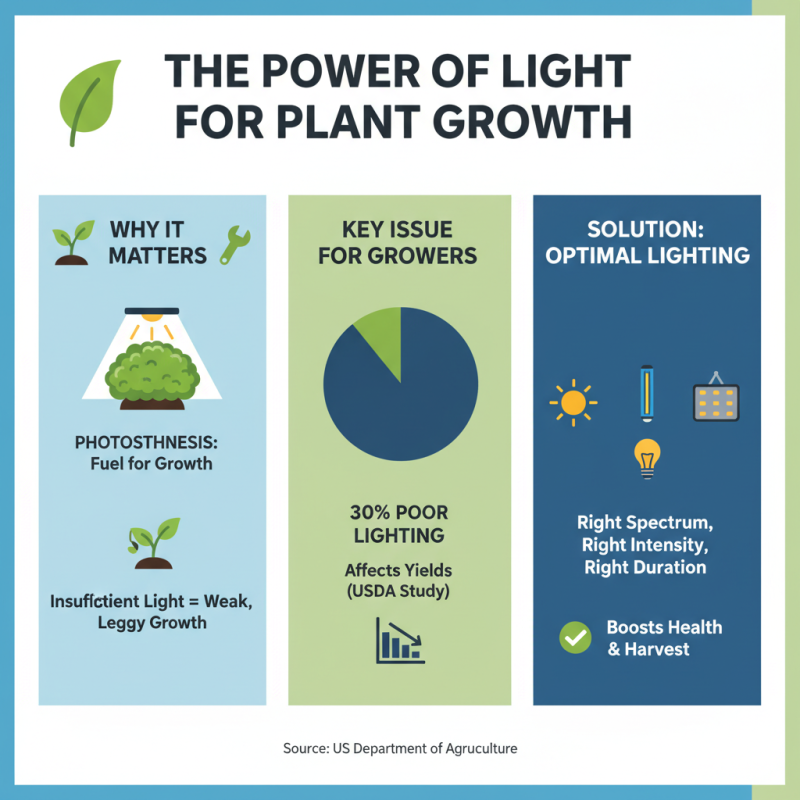
Proper lighting is vital for plant growth. Plants rely on light for photosynthesis. Insufficient light can hinder their development, leading to weak and leggy growth. According to a study by the US Department of Agriculture, nearly 30% of growers reported poor lighting as a key issue affecting their yields.
Different plants require different light intensities. For instance, leafy greens thrive in lower light conditions, while tomatoes need more intense lighting. Researchers recommend that many vegetables need at least 12 to 16 hours of light daily for optimal growth. Without it, plants may exhibit stunted growth or pale leaves, making it clear that proper lighting is not an optional factor.
Choosing the right lighting option is crucial. Many growers still rely on outdated systems, leading to inefficiencies. A report from the American Society for Horticultural Science highlighted that growers could improve output by over 20% with modern LED systems. Yet, many hesitate to invest in these technologies, fearing the change or cost. Lighting setups can seem overwhelming, yet understanding the specific needs of your plants simplifies the decision-making process. So, how well do you know your plants' lighting requirements?
Types of Greenhouse Lights: Comparing LED, HPS, and Fluorescent Options
When choosing greenhouse lights, it's crucial to understand the different types available. LED lights are popular for their energy efficiency and low heat output. They come in various spectrums, making them adaptable for different plant stages. However, their initial cost can be higher than other options.
HPS lights, or high-pressure sodium bulbs, emit a warm light. They are standard for flowering plants and can produce higher yields. But they generate more heat, which may require additional cooling in your greenhouse.
Fluorescent lights are another option, ideal for starting seedlings. They are affordable and easy to find. Their drawback is that they provide less intensity for mature plants.
Tips: Consider the size of your greenhouse. A larger space may need multiple light sources. Don't forget to think about the distance between the light and plants. Too far, and they may not grow well. Too close, and you risk burning them. Experiment with different types and placements to see what works best. Remember, lighting is just one part of plant care. Balancing it with temperature and humidity is essential.
How to Choose the Best Greenhouse Lights for Your Plants?
| Type of Light |
Power Consumption (W) |
Lifespan (hours) |
Light Spectrum |
Cost (Approx.) |
| LED |
300 |
50,000 |
Full Spectrum |
$150 |
| HPS |
600 |
24,000 |
Yellow/Red Spectrum |
$100 |
| Fluorescent |
200 |
20,000 |
Blue/Red Spectrum |
$50 |
Factors to Consider When Selecting Greenhouse Lights for Specific Plants
When choosing greenhouse lights, understanding your plants is crucial. Different plants have varying light needs. For instance, leafy greens often thrive under cooler white LEDs, while fruiting plants prefer warmer light spectrums. According to the American Society for Horticultural Science, optimal photosynthetic rates occur at specific wavelengths. This highlights the importance of matching light quality with plant types.
Intensity is another significant factor. Plants like tomatoes may require higher light levels—around 400-600 µmol/m²/s. However, delicate seedlings thrive under lower intensities, around 200 µmol/m²/s. Too much light can lead to leaf burn, while too little can stunt growth. It's a delicate balance that often requires experimentation and adjustment.
Placement and height of the lights matter as well. Light diminishes as distance increases. Hanging lights too high can make them less effective. Regularly checking plants for signs of light stress is essential. This may include distorted growth or yellowing leaves. Finding the best setup takes time and observation. There’s often a trial-and-error process involved in achieving ideal conditions for your specific plants.
Determining the Right Light Intensity and Spectrum for Your Greenhouse
Choosing the right light intensity and spectrum is crucial for plant growth in a greenhouse. Plants use light for photosynthesis, so understanding their needs is fundamental. Different plant species thrive under specific light conditions. For instance, leafy greens like spinach may prefer cooler light, while flowering plants benefit from warmer tones.
Light intensity matters greatly. Too much intensity can scorch delicate leaves. Insufficient light can lead to leggy growth, where plants stretch toward the light source. A common method to gauge light intensity is using a lux meter. This simple tool can help you measure the light levels in your greenhouse.
The spectrum of light is equally important. Plants primarily absorb blue and red wavelengths. Blue light encourages vegetative growth, while red light supports flowering. However, many growers overlook the green spectrum. It seems plants do not use green light much, but it can influence growth and overall health. Experimenting with different light spectrums may yield surprising results. Observing how your plants react can lead to better practices for your unique environment.
Light Intensity and Spectrum for Greenhouse Plants
This chart illustrates the optimal light intensity (measured in μmol/m²/s) and spectrum (measured in wavelength in nm) for different types of greenhouse plants, helping you choose the best lighting for improved growth.
Tips for Efficiently Installing and Managing Greenhouse Lighting Systems
When setting up greenhouse lighting, placement matters greatly. Position lights to avoid shadows. They should evenly distribute light across plant areas. Invest time in planning the layout. Different plant types may need unique light sources.
Tips for efficient installation include adjusting light height. Tape a measuring tool to help maintain a consistent distance. Plants grow at different rates. Regularly check if lights need height adjustments. This is crucial for preventing light burn or insufficient light exposure.
Also, consider using timers for your lighting system. Automatic scheduling helps ensure plants receive consistent light. It frees up your time while catering to your plants' needs. Track your plants' growth to tweak the setup. Not all setups are perfect initially. Be prepared to experiment and reflect on what works best.