| Legal Age | Sales to minors are prohibited under the EU Tobacco Products Directive framework as implemented by national law. The minimum age is generally 18, but buyers should confirm the rule in the destination country. | The store should display an age policy and use meaningful age verification during checkout and, where required, at delivery. | Required | Protects minors and helps the retailer comply with national tobacco and nicotine-product laws. |
| Nicotine Strength | Consumer e-liquids containing nicotine are generally limited to a maximum concentration of 20 mg/mL under the EU framework. | Check that the nicotine strength is clearly stated in mg/mL and that products do not exceed the applicable national limit. | EU-wide baseline | Unusually high strengths may indicate non-compliant or incorrectly labelled products. |
| Refill Containers | Nicotine-containing refill containers are generally limited to a maximum capacity of 10 mL. | Confirm the bottle volume, nicotine concentration, batch details, and child-resistant closure. | EU-wide baseline | Standardized container limits reduce exposure risks and support safer handling. |
| Cartridge and Tank Capacity | Electronic cigarettes and single-use cartridges or tanks are generally limited to a maximum liquid capacity of 2 mL. | Check the stated capacity and be cautious when a product description exceeds the applicable limit for the market of sale. | EU-wide baseline | Capacity limits are part of the product-safety requirements applied to regulated nicotine devices. |
| Packaging and Health Warnings | Nicotine products should carry required health warnings, safety information, ingredients, nicotine content, batch information, and appropriate child-safety statements. | Look for complete, legible, destination-market labelling rather than plain packaging with only marketing claims. | Required | Clear packaging helps buyers identify contents, risks, and traceability information before use. |
| Product Notification | Manufacturers and importers generally need to submit regulated nicotine products to the relevant authorities before placing them on the market. | A reliable retailer should be able to provide product specifications, manufacturer or importer details, and traceability information when requested. | Required before sale | Notification and traceability requirements help authorities monitor products placed on the market. |
| Ingredient Transparency | Product information should identify ingredients and nicotine content accurately. Marketing must not be misleading or imply that a product is risk-free. | Avoid listings with missing ingredients, exaggerated health claims, or unclear descriptions of nicotine content. | Required | Transparent information allows buyers to make informed purchasing decisions. |
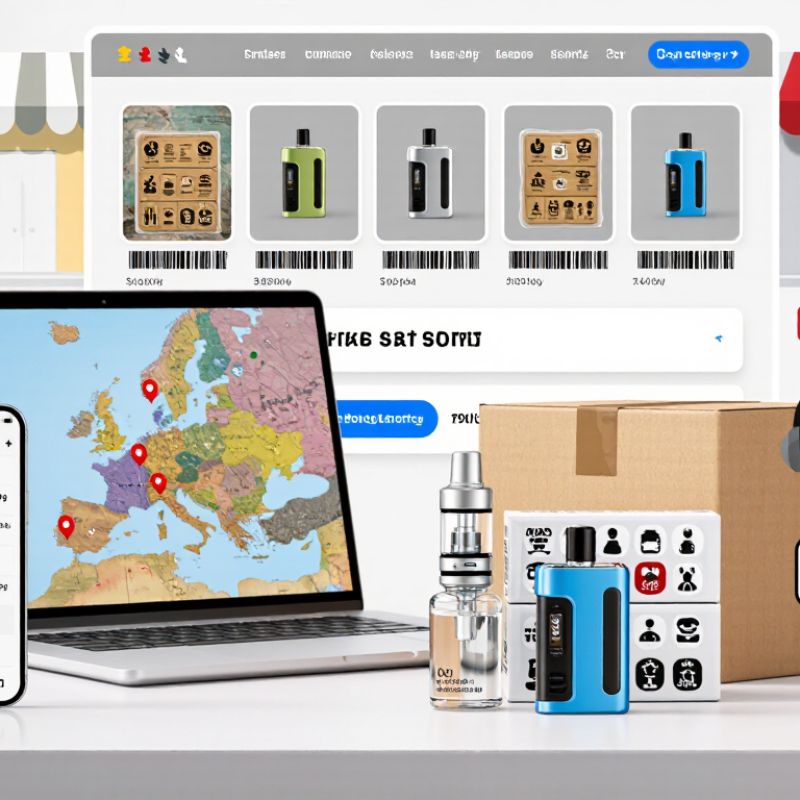
| Cross-Border Online Sales | Distance selling rules, retailer registration, delivery restrictions, and age-verification requirements can differ by country. Some destinations restrict or prohibit cross-border sales of nicotine products. | Before ordering, review the store's delivery-country list, registration information, age-check process, returns policy, and customs or tax notices. | Country-specific | A store that legally ships to one European country may not be legally permitted to ship to another. |
| Taxes and Duties | VAT rates, national excise duties, environmental charges, and import costs vary across European markets and may change over time. | Check whether the displayed price includes VAT and whether additional duties, handling fees, or delivery charges may apply. | Country-specific | Transparent pricing reduces unexpected costs at checkout or delivery. |
| Retailer Identity | A legitimate online store should publish verifiable business information, customer-service contacts, terms and conditions, privacy information, and a physical or registered business address where required. | Check the legal entity details, contact methods, secure website connection, and consistency between the store information and payment page. | Reliability indicator | Clear business identification makes complaints, refunds, and regulatory follow-up more practical. |
| Payment Security | Reliable stores should use reputable payment processing, secure checkout, and clear transaction records. | Use payment methods with buyer protection where available and avoid retailers requesting unusual payment methods without documentation. | Buyer safeguard | Secure payment practices reduce fraud and improve the chance of resolving unauthorized transactions. |
| Returns and Warranty | Consumer rights and withdrawal rules may apply differently depending on the country, product type, opened packaging, hygiene considerations, and whether the item is faulty. | Read the returns period, exclusions for opened e-liquid or used devices, warranty terms, and the process for reporting defects. | Country-specific | Clear policies help buyers understand their options if an item is damaged, incorrect, or defective. |
| Product Authenticity and Condition | Products should arrive sealed, correctly labelled, within their stated shelf life, and with intact batch or lot information. | Do not use products with leaking containers, damaged seals, missing warnings, altered labels, or unexplained discrepancies. | Quality check | Packaging condition and traceability can reveal storage, counterfeit, or supply-chain problems. |
| Responsible Marketing | Retail advertising should not target minors, use misleading health claims, or present vaping as completely risk-free. | Prefer stores that provide factual product information and avoid youth-oriented imagery or unsupported medical promises. | Compliance indicator | Responsible marketing is a useful sign that the retailer takes legal and consumer-protection obligations seriously. |
| Country Verification | European rules are not completely uniform. National authorities may impose stricter requirements on flavours, packaging, advertising, registration, recycling, or online sales. | Check the official government or regulator information for the buyer's country before placing an order. | Essential step | Local verification is necessary because EU-level rules are implemented and supplemented differently across countries. |