10 Tips for Choosing Commercial Hydroponic Systems

Choosing commercial hydroponic systems is a practical business decision, not merely a technology upgrade. The right system must support reliable harvests, efficient labor, food safety, and predictable operating costs. A clean demonstration room can look impressive. However, daily production may reveal clogged emitters, unstable nutrient levels, or difficult access for maintenance. These details matter when hundreds of plants depend on consistent water flow.

This guide presents ten practical tips for evaluating a system before signing a contract. It considers crop type, available space, automation, energy use, water management, sanitation, scalability, and technical support. A vertical rack may suit compact lettuce production, while vine crops can require stronger structures and wider service aisles. Ask suppliers for clear performance data, maintenance schedules, warranty terms, and references from comparable facilities. Numbers should be verified under conditions similar to yours.

No checklist is perfect. Site conditions change. Budgets also become uncomfortable. Experienced growers often adjust their original plans after reviewing labor records and utility bills. That is not failure; it is useful evidence. A trustworthy decision combines supplier expertise with independent advice from agronomists, engineers, and food safety professionals. It also leaves room for staff training and unexpected repairs. By examining each factor carefully, growers can choose commercial hydroponic systems that support safe, efficient, and sustainable production rather than chasing attractive features alone.
10 Tips for Choosing Commercial Hydroponic Systems

Define Your Production Goals and Crop Requirements

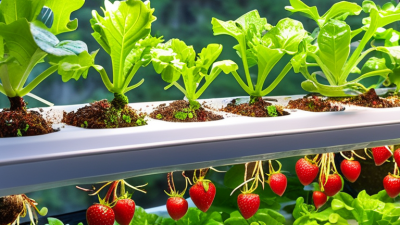
Before comparing commercial hydroponic systems, define what success means for your operation. A leafy-greens farm supplying restaurants needs steady weekly harvests. A tomato facility needs stronger support, deeper root space, and longer production cycles. Write down target yield, crop timing, labor capacity, and acceptable waste. Keep each measure realistic. Crop requirements should guide every design choice. Lettuce usually needs shallow channels and consistent airflow. Tomatoes may require trellises, larger reservoirs, and careful nutrient management. Herb crops can vary widely in height and harvest frequency.

Tip: Create a crop-and-production brief before requesting system proposals. Include plant spacing, expected harvest weight, daily water use, lighting needs, and sanitation routines. A 1,000-square-meter room may look efficient on paper, yet narrow walkways can slow harvesting and increase crop damage. Measure movement, not only growing capacity. Check pH, electrical conductivity, temperature, and root-zone oxygen regularly. These records help confirm whether the system supports the crop rather than merely holding it.

Review local climate conditions before choosing cooling, heating, or humidity controls. Seasonal heat can change water demand quickly. Leave space for maintenance and future crop trials. I once underestimated cleaning time between cycles; the production schedule became difficult to maintain. That mistake showed me that labor planning deserves the same attention as yield forecasts. A small pilot area can reveal uneven flow, weak airflow, or awkward access before full installation. Not every efficient design fits every crop.

Compare System Types, Layouts, and Growing Methods

Choosing a commercial hydroponic system starts with the crop, not the equipment catalog.

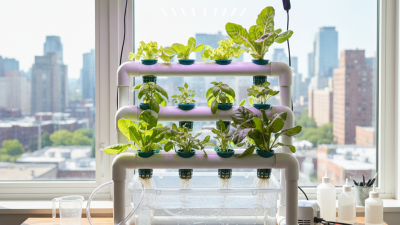
Nutrient film technique suits leafy greens with shallow roots and quick harvest cycles. Deep water culture offers stable moisture, but heavy rafts require strong support and safe lifting access. Drip systems with coco or rockwool handle tomatoes, cucumbers, and peppers more naturally. Ebb-and-flow benches can serve mixed crops, although uneven drainage may appear across long tables. Aeroponics saves water, yet clogged nozzles can stress roots within hours.

Compare layouts as carefully as growing methods.

Long parallel channels simplify harvesting and pipe installation. Separate zones allow different nutrient recipes for lettuce and fruiting crops. Keep access wide enough for carts, cleaning tools, and emergency repairs. Place reservoirs near the growing areas, but protect them from heat and direct light. Measure ceiling height before choosing stacked racks. A beautiful layout can still fail when workers cannot reach a rear valve. That mistake happens.

Review labor, energy, and monitoring needs before scaling.

Manual transplanting may suit a small trial, while automated dosing supports consistent production. Use food-safe materials, calibrated sensors, filtration, and documented sanitation routines. Check pH and electrical conductivity at scheduled intervals, then confirm readings with independent tests. Backup pumps and alarms reduce crop losses during outages. However, redundancy adds cost and maintenance. Start with one representative bay. Record water use, harvest weight, disease pressure, and worker time. Adjust the design after real data, not optimistic estimates. No system is perfect.

Assess Water, Nutrient, Energy, and Climate Management

10 Tips for Choosing Commercial Hydroponic Systems

Assess Water, Nutrient, Energy, and Climate Management

Water quality should guide the system choice. Test pH, alkalinity, hardness, and source contaminants before installation. Measure before guessing. High alkalinity can push pH upward and increase acid use. Recirculating systems also need reliable filtration, drainage, and sanitation controls. Small errors multiply. Record water temperature, flow rate, and electrical conductivity during daily checks.

Nutrient management requires accurate dosing and simple maintenance. Choose injectors that match the crop’s feeding range and facility size. Separate stock solutions when chemical reactions could create sediment. Calibrate pH and conductivity sensors regularly. A backup dosing method is sensible during sensor failure. However, more automation can create more failure points. That trade-off deserves honest review.

Energy and climate controls often determine operating costs. Compare pump power, lighting demand, heating needs, and dehumidification loads across seasons. Keep air movement even around dense foliage. Monitor temperature, humidity, carbon dioxide, and vapor pressure deficit together. A cool night with wet leaves may invite disease, even when humidity seems acceptable. No plan is perfect. Review real energy bills, crop losses, and maintenance time after each production cycle. The best system may not be the most advanced; it should remain stable when staff are busy and conditions change.

10 Tips for Choosing Commercial Hydroponic Systems - Assess Water, Nutrient, Energy, and Climate Management

No. Selection Tip Management Dimension Practical Data to Assess Reference Operating Range or Target Decision Check
1 Test the source water first Water quality and treatment capacity pH, electrical conductivity, alkalinity, hardness, sodium, chloride, iron, bicarbonate, microbial quality, and seasonal variation Many leafy-crop systems operate near pH 5.5–6.5. Source-water EC should be low enough to leave room for crop nutrients; high sodium or chloride may require reverse osmosis or blending. Require a recent laboratory analysis and a treatment design based on peak-season water demand.
2 Match nutrient control to the crop Fertilizer dosing and recipe management Separate stock tanks, dosing accuracy, EC and pH sensors, calibration records, nutrient recipe storage, and alarm functions Typical target EC varies by crop and growth stage: approximately 1.2–2.0 mS/cm for many leafy greens and about 2.0–3.5 mS/cm for many fruiting crops. Choose a system that can run crop-specific recipes rather than one fixed nutrient setting.
3 Verify root-zone oxygenation Dissolved oxygen and hydraulic design Dissolved oxygen, flow rate, pipe sizing, pump duty, oxygenation method, tank turnover, and backup aeration A dissolved oxygen level above approximately 5 mg/L is commonly used as a practical target for many hydroponic root zones; warmer water holds less oxygen. Request performance data at full load, not only at the nominal pump rating.
4 Control reservoir temperature Water temperature and pathogen-risk management Reservoir temperature, heat gain from pumps and lighting, chiller capacity, insulation, and temperature alarms Approximately 18–22°C is a common operating range for many cool-season hydroponic crops; the ideal value depends on crop, oxygen level, and disease-control strategy. Confirm cooling capacity during the hottest expected outdoor conditions.
5 Calculate total energy demand Lighting, pumping, cooling, heating, and ventilation Installed electrical load, daily operating hours, peak demand, lighting power, pump efficiency, HVAC load, and annual kWh forecast Use crop output and site conditions to calculate kWh per kilogram or kWh per square meter, rather than comparing equipment wattage alone. Obtain a full-load energy model that includes seasonal climate loads and demand charges.
6 Size lighting by crop requirement Light intensity, photoperiod, and crop productivity PPFD, photoperiod, daily light integral, fixture uniformity, dimming range, heat output, and lighting efficiency DLI requirements vary widely: many leafy greens perform well around 12–17 mol/m²/day, while fruiting crops generally need higher light levels. Compare usable light at canopy height and include the effect of fixture heat on cooling costs.
7 Design for humidity and VPD control Climate management and transpiration Air temperature, relative humidity, vapor pressure deficit, airflow, dehumidification capacity, and condensation risk A moderate VPD of roughly 0.8–1.2 kPa is often suitable for vegetative leafy crops, but crop and growth-stage targets differ. Ensure the HVAC design can remove nighttime moisture when lights are off.
8 Build in filtration and sanitation Water reuse, biosecurity, and maintenance Filter rating, solids removal, UV or other treatment options, cleanout access, drainability, sanitation procedures, and wastewater handling Treatment must be validated for the actual flow rate and water quality; filters require scheduled inspection and replacement based on pressure drop. Reject designs with inaccessible pipes, dead legs, or tanks that cannot be completely drained and cleaned.
9 Plan for alarms and redundancy Operational continuity and risk control Backup pumps, emergency power, high and low water alarms, pH and EC alarms, temperature alarms, data logging, and remote notifications Critical systems should be monitored continuously, with alarm thresholds set around crop-specific safe limits and verified during commissioning. Calculate the safe response time after power, pump, cooling, or dosing failure.
10 Evaluate scalability and labor Capacity, workflow, automation, and operating cost Plant sites, reservoir volume, labor hours per production cycle, cleaning time, harvest access, automation level, spare parts, and expansion capacity Allow sufficient access for inspection, harvesting, cleaning, and repairs; size pumps, dosing equipment, and HVAC for the intended maximum production load. Compare total cost of ownership, including labor, utilities, consumables, maintenance, downtime, and future expansion.
Note: Reference ranges are general commercial starting points. Final targets should be adjusted for crop type, cultivar, growth stage, system design, local water quality, and applicable food-safety requirements.

Evaluate Automation, Maintenance, Scalability, and Labor Needs

10 Tips for Choosing Commercial Hydroponic Systems

Evaluate Automation, Maintenance, Scalability, and Labor Needs

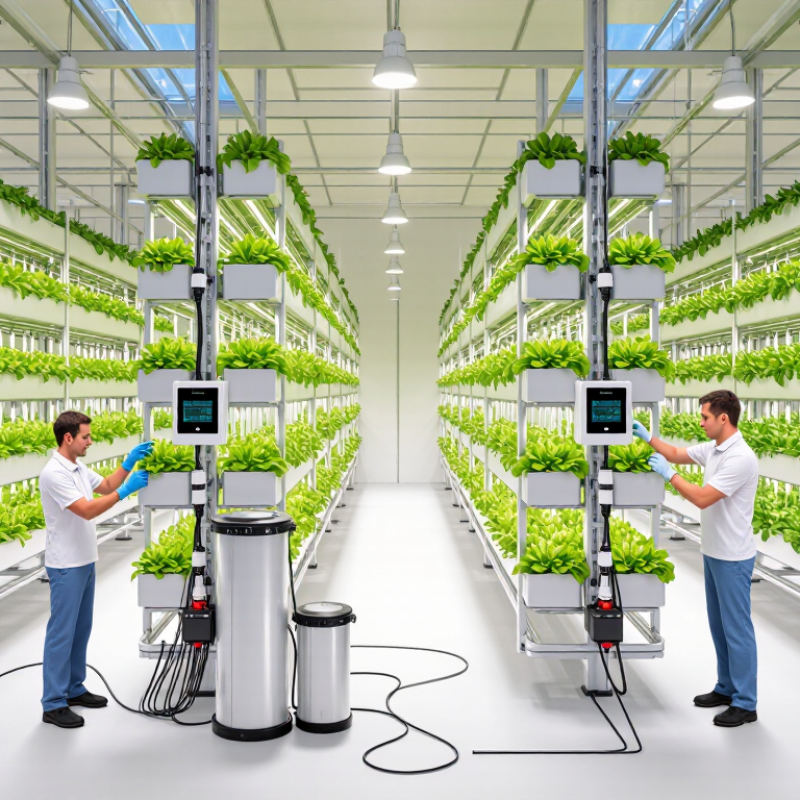
Choosing a commercial hydroponic system requires more than comparing crop capacity or equipment prices. Automation should reduce repetitive work, not hide operational risks. Ask whether sensors track pH, nutrients, temperature, flow, and dissolved oxygen consistently. Request calibration records and test alarms under real conditions. A silent failure can damage a week’s crop overnight. Keep manual controls available. They matter during network outages. From practical installations, simple dashboards are often easier for staff to trust than crowded screens. However, I have seen teams automate routines before understanding them. That mistake made troubleshooting slower, not faster.

Maintenance needs a written rhythm: daily inspection, weekly cleaning, and scheduled replacement of pumps, filters, emitters, and probes. Choose layouts that let workers reach valves without moving several trays. Smooth surfaces and accessible drains reduce contamination risks and cleaning time. Record every fault, repair, and calibration result. These records support reliable decisions and reveal whether the system performs as promised. Labor planning should include harvest peaks, sanitation, crop changes, and staff absences. A system needing one skilled technician may become fragile during expansion. Ask for realistic staffing estimates from comparable production volumes, not optimistic projections.

Scalability should be tested in stages. Confirm that added modules will not overload water lines, electrical circuits, or monitoring systems. Review training requirements before installation. Independent technical inspections can uncover weaknesses that demonstrations miss. No design is perfect. I would leave room for slower growth, because expansion rarely follows the original schedule.

Calculate Costs, Supplier Support, Safety, and Long-Term Value

10 Tips for Choosing Commercial Hydroponic Systems

A commercial hydroponic system should be judged by its full cost, not its purchase price. List equipment, installation, lighting, pumps, filtration, nutrients, labor, and replacement parts. Then estimate monthly water and electricity use. A cheap pump can become expensive when it fails during a crop cycle. Ask suppliers for itemized quotations, realistic output estimates, and maintenance schedules. Verify those figures with growers operating similar systems.

Supplier support affects every harvest. Check response times, training arrangements, spare-part availability, and warranty conditions. Request clear manuals and emergency procedures. Speak with recent customers, not only selected references. Good support should include practical guidance for cleaning, nutrient balance, sensor calibration, and software updates. Written promises are useful, but reachable technicians matter more.

Safety needs careful attention because water and electricity share the same workspace. Inspect drainage, electrical protection, structural loads, access paths, and emergency shutoffs. Confirm that materials suit food production and local safety requirements. Long-term value depends on modular design, reliable monitoring, repairable components, and consistent crop quality. A system that expands without major rebuilding may protect future cash flow. However, automation is not always a saving. Sensors drift, software can confuse staff, and spare parts may arrive slowly. My checklist is not perfect, so I leave room for a small pilot before committing to a full installation. That trial can expose hidden labor, cleaning time, and energy demand. Better to discover those costs early.